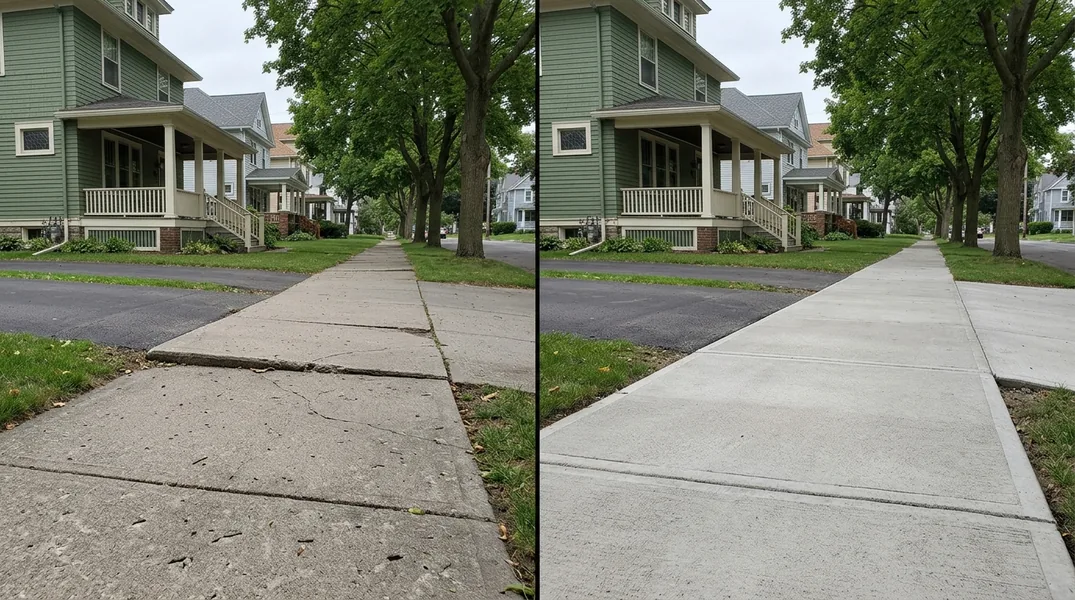
Understanding Frost Heave: Rochester's Concrete Enemy
If you own a home in Rochester, you've likely noticed how winter can wreak havoc on concrete surfaces. Frost heave is one of the most destructive forces working against your driveway, patio, or foundation. This natural phenomenon occurs when moisture in the soil beneath your concrete freezes and expands, creating upward pressure that cracks and displaces the surface above.
The problem is particularly severe in the Rochester region because of our unique geological history. The area sits on what geologists call the Lake Plain, a landscape shaped by glacial activity thousands of years ago. This glacial heritage left behind soil composition that is especially susceptible to frost heave. When temperatures drop below freezing, any water trapped in the soil expands by approximately 9 percent, creating tremendous force that concrete simply cannot resist over time. This is why frost heave concrete Rochester NY homeowners experience isn't just a minor inconvenience; it's a serious structural concern that demands attention.
Lake Plain Clay: Why Your Soil Works Against Your Driveway
The soil beneath most homes in Rochester consists primarily of clay and silt left behind by glacial retreat. This lake plain clay concrete cracking issue stems from the soil's natural ability to retain moisture. Clay particles are extremely fine and can hold water in their microscopic spaces, making the soil beneath your Concrete Driveways a potential ice factory every winter.
What makes this particularly problematic is that frost susceptible soil concrete damage isn't limited to the surface. The damage accumulates year after year. Each freeze-thaw cycle pushes your concrete up slightly, and when it thaws, it doesn't always settle back into its original position. Over a decade, this can result in significant heaving, cracking, and uneven surfaces that become both unsafe and unsightly. The clay-heavy composition of Rochester's soil means that proper drainage and foundation preparation are absolutely critical when installing new concrete. Homeowners who skip these steps often find themselves facing costly repairs within just five to seven years.
How Freeze-Thaw Cycles Damage Concrete Over Time
Rochester experiences an average of 140 to 160 freeze-thaw cycles each year, which is far above the national average. Each cycle represents an opportunity for frost heave to damage your concrete. The process begins innocently enough: moisture from rain, snow, or groundwater seeps into tiny cracks and pores in the concrete and soil below. When temperatures drop, this water freezes and expands, widening the cracks slightly. As the temperature rises, the ice melts and the pressure decreases, but the damage has already been done.
Over multiple seasons, these small cracks grow larger and more numerous. Water penetrates deeper into the concrete and the soil beneath it, reaching the frost line where it will surely freeze again. Eventually, the cumulative damage becomes visible as significant cracks, spalling (surface deterioration), and heaving. What started as a hairline crack can become a structural liability. This is why addressing frost heave early is so important. Waiting until your driveway looks severely damaged means you'll likely need more extensive Concrete Repair & Resurfacing than if you'd acted sooner.
Prevention Strategies: Building Concrete That Lasts in Rochester
The best defense against frost heave is prevention, and it all starts with proper installation. When Rochester Concrete installs Concrete Driveways, we don't simply pour concrete on top of existing soil. We prepare a proper base with adequate drainage, typically using compacted gravel or crushed stone that allows water to drain away rather than accumulate. This foundation layer is essential because it reduces the amount of moisture available to freeze beneath your concrete.
Proper slope and drainage are equally critical. Your driveway should slope away from your home and any structures to encourage water runoff. Standing water is your concrete's worst enemy in a climate like Rochester's. Additionally, using air-entrained concrete, which contains tiny air bubbles that allow the concrete to expand slightly without cracking, provides better frost resistance than standard concrete. The concrete mix itself should be designed for the specific soil conditions in your area. When you're ready to install new concrete, requesting a free estimate from Rochester Concrete ensures your project is designed with these frost heave considerations in mind.
Repairing Frost Damage: When to Call a Professional Near Me
If your concrete is already showing signs of frost heave damage, don't wait for the problem to worsen. Early intervention can save you thousands of dollars in the long run. Common signs include visible cracks, uneven surfaces, heaving sections, or water pooling on your driveway. These issues only deteriorate faster once they've begun, especially through our harsh Rochester winters.
Professional Concrete Repair & Resurfacing can address these problems through several methods depending on severity. Minor cracks can be sealed to prevent further water infiltration. More significant damage might require resurfacing or, in severe cases, replacement of the affected sections. Rochester Concrete specializes in diagnosing frost damage and recommending the most cost-effective solution for your specific situation. If you're in Irondequoit, Greece, or other surrounding areas, we serve your community with the same expertise. Call us at (585) 575-0462 to discuss your concrete concerns.
Long-Term Protection: Maintenance Tips for Rochester Homeowners
Beyond initial installation and repair, ongoing maintenance is your best ally against frost heave damage. Seal your concrete every two to three years with a quality concrete sealer. This creates a protective barrier that reduces water penetration, which in turn reduces the amount of moisture available to freeze beneath the surface. In Rochester's climate, this simple step can extend the life of your concrete by years or even decades.
During winter, be cautious with salt and chemical deicers, as they accelerate concrete deterioration. Instead, use sand or kitty litter for traction, or opt for pet-friendly alternatives. Keep gutters and downspouts clean so water drains away from your foundation and driveway rather than pooling and seeping into the soil. Remove standing water promptly after rain or snow melt. These preventive measures work together to minimize the conditions that allow frost heave to develop. If you're unsure whether your concrete needs sealing or if you want professional advice on protecting your investment, Rochester Concrete is here to help. Contact us today for a consultation about your concrete's long-term health.
Looking for a professional concrete contractor in Rochester? Rochester Concrete responds fast for all your concrete needs.
Get a Free QuoteOur services: Concrete Driveways · Concrete Patios · Stamped & Decorative Concrete