Concrete vs. Pavers: The Key Differences
When it comes to upgrading your outdoor space in Rochester, one of the biggest decisions you'll face is choosing between concrete and pavers. Both materials have earned their place in residential landscaping, but they offer distinctly different benefits and drawbacks. Understanding these differences is essential before making a decision that will impact your home's curb appeal and functionality for years to come.
Concrete Driveways are typically poured as one continuous slab, creating a uniform, seamless surface. Pavers, on the other hand, are individual units (usually made from concrete, stone, or brick) that are laid out in patterns and held in place by sand and a compacted base. This fundamental difference in construction leads to variations in appearance, durability, maintenance requirements, and overall cost. For homeowners in Brighton and surrounding areas, both options are viable, but the choice depends on your specific needs, budget, and aesthetic preferences.
Durability and Weather Resistance in Rochester's Climate
Rochester's climate presents unique challenges for outdoor surfaces. The region experiences freeze-thaw cycles, significant snowfall, and salt exposure from winter road maintenance and de-icing products. These conditions can take a toll on any driveway or patio material. Concrete, when properly installed and sealed, is remarkably resilient in these conditions. A well-maintained concrete surface can last 25 to 40 years or more, even in Rochester's demanding winters. The key is ensuring proper drainage, using air-entrained concrete (which contains tiny air bubbles to accommodate ice expansion), and applying a quality sealant every few years.
Pavers also perform well in cold climates, but with some important caveats. Individual pavers won't crack as easily as a monolithic concrete slab because each unit can move independently. However, the sand joints between pavers can shift and settle over time, particularly in freeze-thaw environments. This means pavers may require more frequent maintenance to keep them level and to replenish joint material. Additionally, salt and de-icing chemicals can affect both materials, though pavers' individual nature sometimes allows for easier replacement of damaged units compared to patching concrete.
Aesthetic Appeal and Design Flexibility
If visual impact is your priority, pavers offer unmatched design flexibility. They come in numerous colors, shapes, sizes, and materials, allowing you to create intricate patterns, borders, and custom layouts. Whether you prefer a rustic brick appearance, natural stone elegance, or modern geometric designs, pavers can deliver virtually any aesthetic you envision. This versatility makes pavers an excellent choice for homeowners who view their outdoor space as an extension of their home's architectural style.
Concrete shouldn't be overlooked for aesthetics, however. Modern Stamped & Decorative Concrete options allow you to replicate the look of stone, brick, or tile at a fraction of the cost. Stained concrete can also provide rich colors and sophisticated finishes. For those seeking a clean, contemporary look or a practical, uniform surface, concrete delivers simplicity and elegance. Many homeowners in Irondequoit are discovering that decorative concrete offers the best of both worlds: visual interest with the durability and low maintenance of a solid slab.
Maintenance Requirements and Long-Term Care
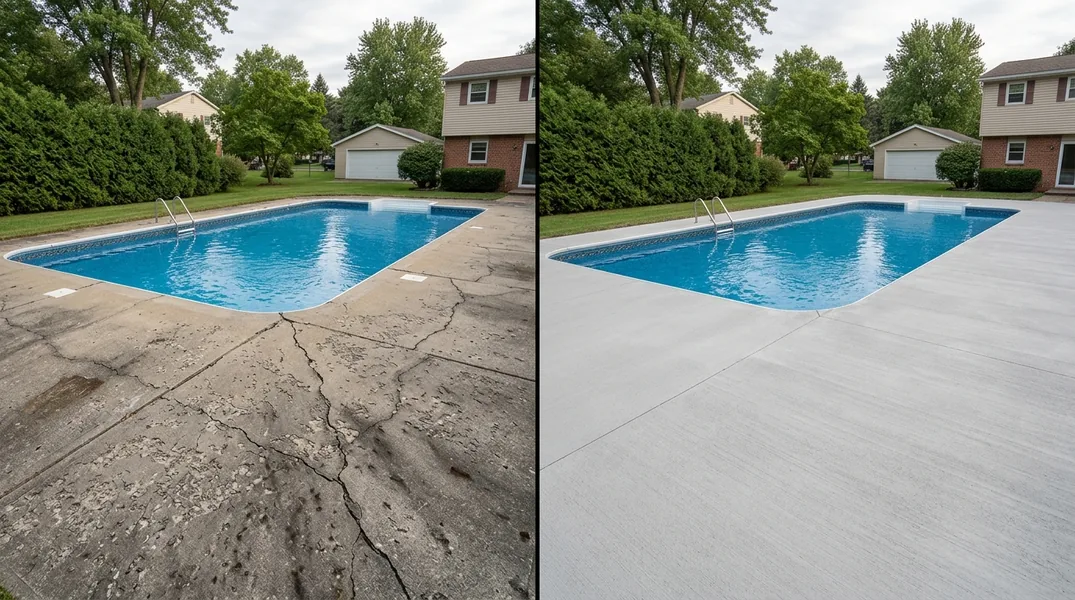
Maintenance is where concrete and pavers diverge significantly. Concrete requires periodic sealing (typically every 2 to 3 years) to protect against moisture penetration, salt damage, and UV degradation. You'll also need to monitor for cracks and address them promptly with Concrete Repair & Resurfacing to prevent water from seeping underneath and causing further damage. Regular sweeping and occasional pressure washing keep concrete looking fresh. The good news is that these tasks are straightforward and relatively inexpensive when done proactively.
Pavers require a different maintenance approach. You'll need to sweep out debris, occasionally wash the surface, and monitor the sand joints between units. Over time, weeds may grow through these joints, requiring either manual removal or herbicide application. Settling is another concern with pavers; you may need to reset individual units if they become uneven. While paver maintenance isn't necessarily harder than concrete maintenance, it does tend to be more frequent and hands-on. Some homeowners appreciate the ability to replace individual damaged pavers without affecting the rest of the surface, while others find the ongoing attention pavers demand to be a drawback.
Cost Comparison: Concrete vs. Pavers in Rochester
Budget is often the deciding factor for homeowners weighing concrete versus pavers. Generally speaking, concrete is the more economical choice upfront. Standard Concrete Patios and driveways typically cost less per square foot than paver installations. The labor is faster, fewer materials are involved, and the installation process is more straightforward. However, decorative concrete options like stamping or staining can narrow the price gap considerably. For a detailed breakdown of what you can expect to invest, it's worth requesting a free estimate from Rochester Concrete to compare pricing for your specific project.
Pavers carry a higher initial cost due to the materials themselves and the labor-intensive installation process. However, some homeowners view this as an investment in longevity and flexibility. Individual pavers can be replaced without redoing the entire surface, potentially extending the life of your installation. Over a 30 to 40 year period, the total cost of ownership may be comparable or even favorable for pavers if concrete requires significant repairs or resurfacing. The reality is that both materials can offer excellent value when properly installed and maintained. Your choice should factor in not just the upfront investment but also your tolerance for maintenance and your long-term plans for the property.
Making Your Decision: Which Option Is Right for You?
Choosing between concrete and pavers ultimately depends on your priorities. If you value simplicity, lower upfront costs, and minimal maintenance, concrete is likely your best bet. It's ideal for driveways where a uniform, durable surface is all you need. If you prioritize design flexibility, enjoy hands-on maintenance, and want the ability to replace individual units, pavers may be worth the extra investment. Consider your home's architectural style, your climate resilience needs specific to Rochester's winters, and how much time you're willing to dedicate to upkeep.
Don't hesitate to consult with professionals who understand your local conditions. Rochester Concrete has extensive experience helping homeowners in Greece, Brighton, and throughout the region make informed decisions. Whether you're leaning toward concrete or still exploring your options, our team can discuss your vision, assess your site, and explain how each material would perform in your specific situation. Call us today at (585) 575-0462 or visit our website to schedule your free estimate and get expert guidance tailored to your project.
Looking for a professional concrete contractor in Rochester? Rochester Concrete responds fast for all your concrete needs.
Get a Free QuoteOur services: Concrete Driveways · Concrete Patios · Stamped & Decorative Concrete